Breaking News–Interview in Who Do You Think You Are Magazine–September 10th Click EVENTS
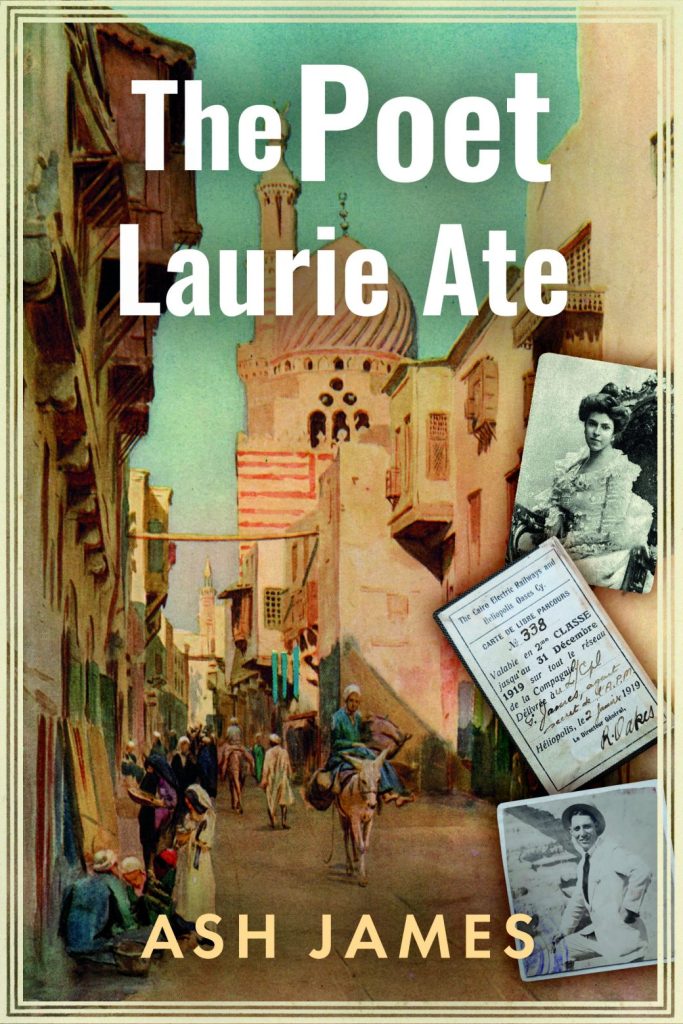
A novel by Ash James-inspired by true events.
And now available in all good bookshops and online
“A thought-provoking action story set in Cairo and on the island of Menorca in 1917, during World War One , which resonates with the present. It unfolds through the experiences of those who passionately cared but were rarely listened to”
“An exciting and serious story inspired by real life experiences, which explores the universal and timeless themes of love, honour, trust and truth.”
Troubador Publishers
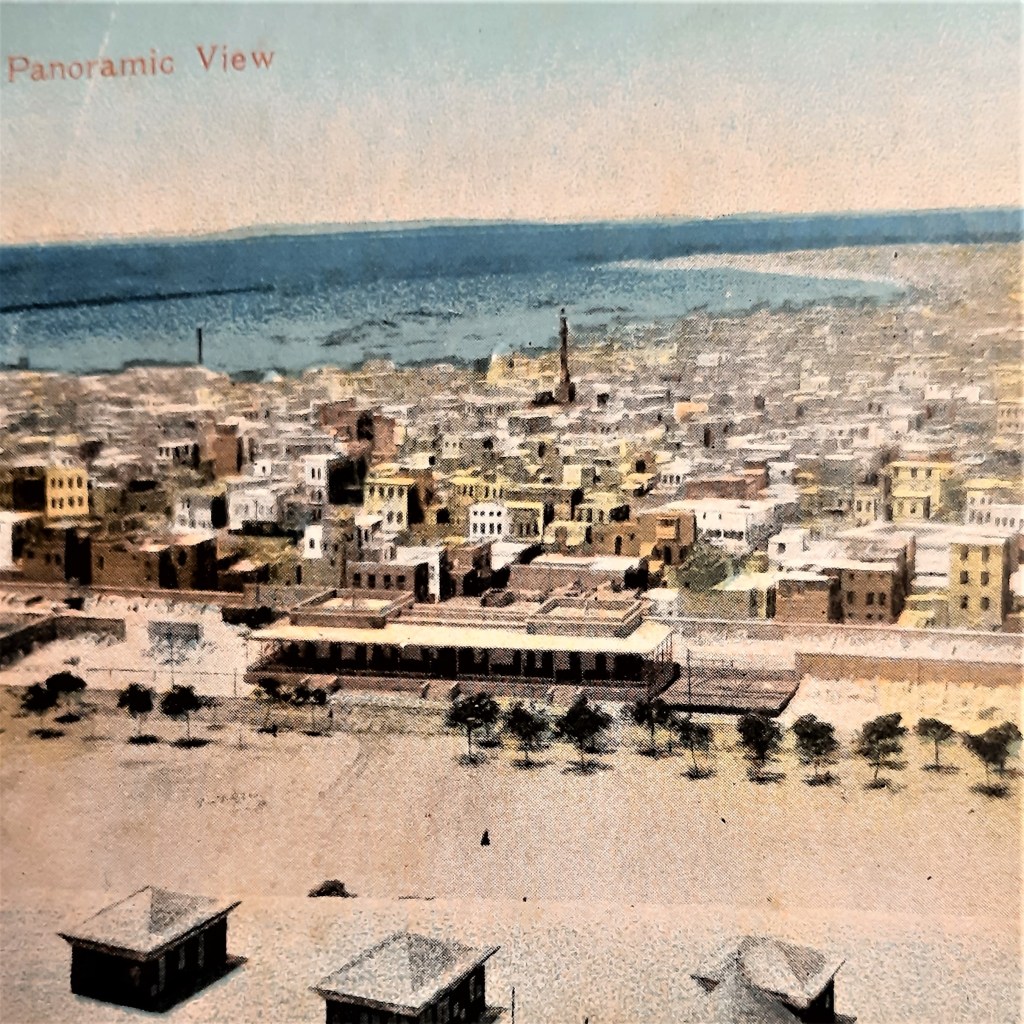
Photo ©Ash James
Where To Buy
ISBN: 9781805143826
Paperback: 234mmx156mm Portrait.
all good bookshops, and online at Amazon.
Price: £10.99
Ebook ISBN 9781805148678
Price: £4.99
Colliding Worlds?
He just fell into it.
Thomas Laurie was already much needed; a village policeman and an honourable man, he kept the peace at home, even in war. Yet driven by conscience and filleted by the stares of strangers, he`d entered and army enlisting office in Worcester and jumped.
Now, owned by King and country he was thousands of miles away from those he loved, holed up in a rat-infested carpet shop in a darkened Cairo backstreet, intent upon a plan. Somewhere opposite within the gloom of a tired hostel was the spy. He and Corporal Nooney had become a great team. They would sort it, they always did.
But still the doubts nagged. Mildred Lowthian, his senior officer at The Arab Bureau, was unlike any woman he`d known, but she too was burdened by the duplicity of superiors. And the ignorance and disdain of those with power had shocked.
Who was he really helping?
At the same hour in her farmhouse on the island of Menorca, the formidable self-made landowner Llucia Quintana sat fearing for the safety of Oriol, her only son and heir. His routine trading trip to Cairo was to be his last; Mediterranean passage had become increasingly hostile and British control of the city unpredictable. He`d not made contact; but how could she rely upon the support of others, given her past?
In these colliding world`s a moving, tragicomic tale unfolds of adventure, conflict, trust and fairness. Surely we would learn: there could be a better world?
“The more I wrote, the more the parallels with our contemporary worlds shot from the page; political instability, establishment, bigotry, discrimination, entitlement. And yet the goodness and optimism of those being done onto remained gloriously impenetrable.”
Ash JAMES
Cairo Panorama at the time of The Poet Laurie Ate, 1917
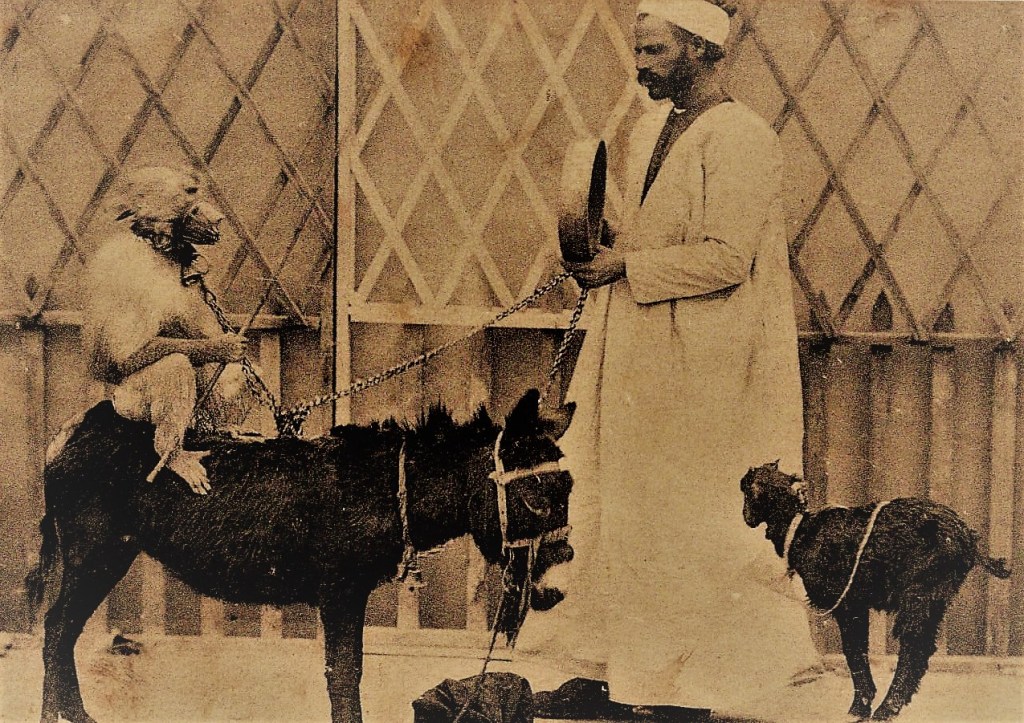
The performing donkey, goat and monkey with their owner (circa 1917) – the inspiration for Manoli and his performing Monkey,first appearing in Ch 2 in Midan Bab El Hadid, central Cairo.
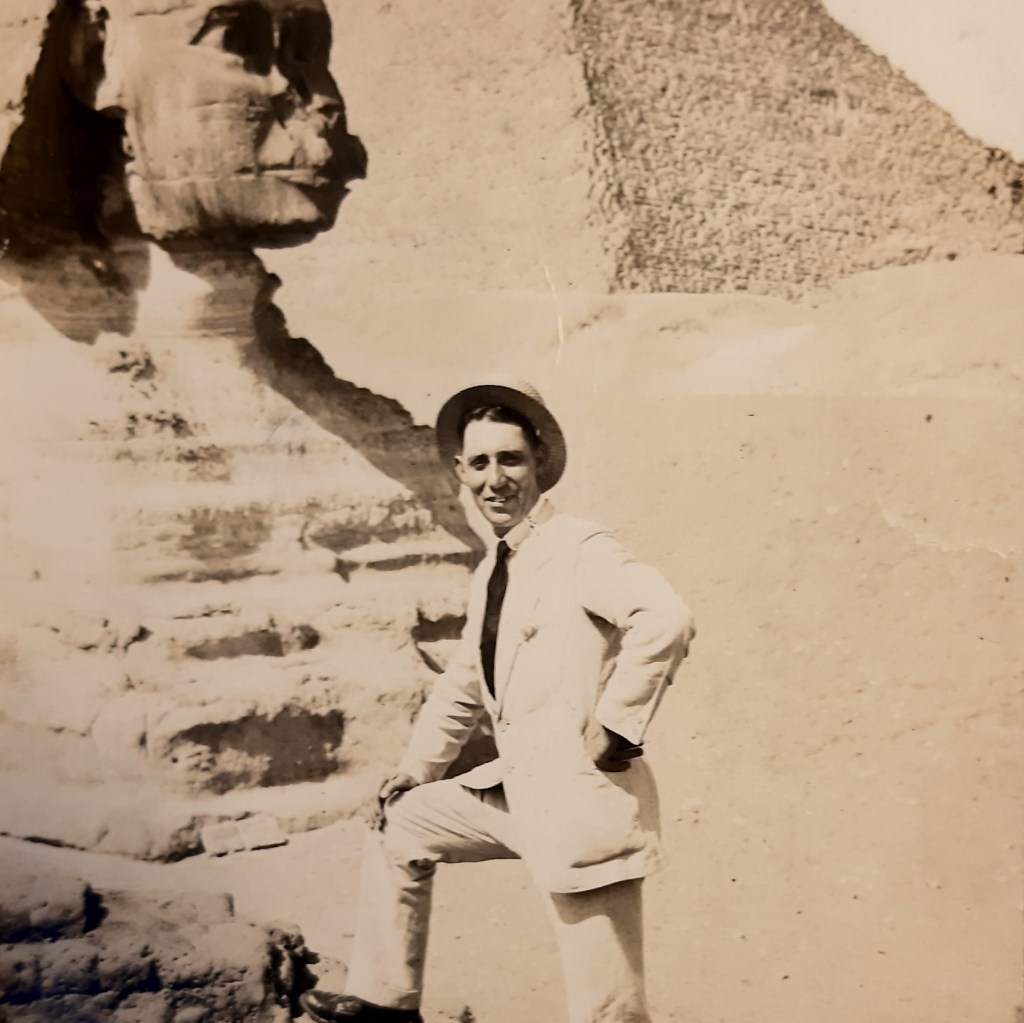
The “real Laurie” in his undercover civvies, 1917-G P James, whose experiences in Cairo in World War One helped to inspire the novel.He is pictured posing for an official photograph at The Sphinx. The same image appeared in his Cairo Tram Passes.
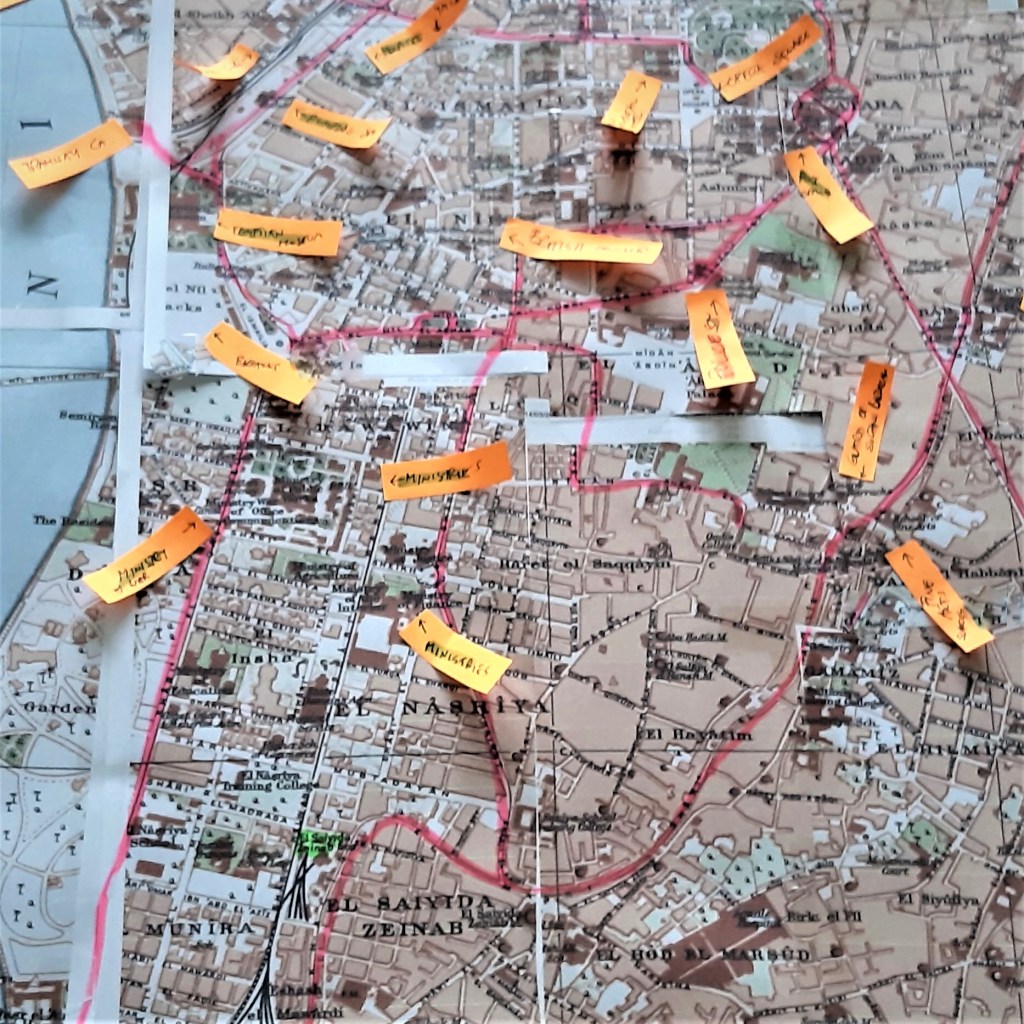
Part of the Cairo Map that showed the city much as it would have been in 1917. Stickers (of which there were many more) represent some of the places that the main character Laurie would have known. The red lines were Tram routes, crucial for public transport, much used in the story by Laurie and his New Zealander colleague, Nooney.
The link below leads to the detailed map, with the relevant citation and rights of access.
Cairo Map at the time of The Poet Laurie Ate
All the places referenced in the novel-streets, squares, roads, hotels, and so on, can be located on this map. Most of the Cairo action in the story can therefore be followed, street by street, should you so wish. Every effort has been made to use those locations as they existed in 1917, either as prescribed on the map or referenced by my own research and primary sources.
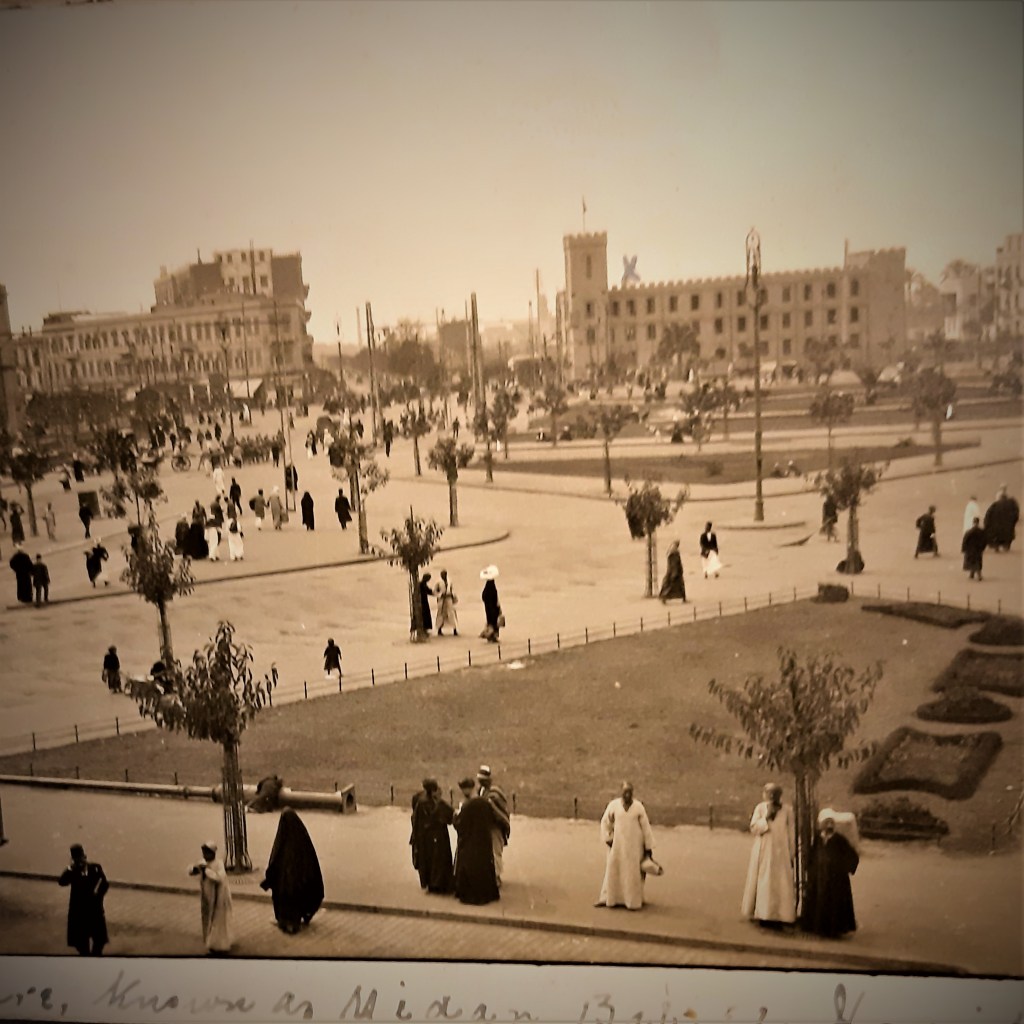
Midan Bab El Hadid square, scene of the action in The Poet Laurie Ate. The British Army barracks are in the background, with an
X marking the part of the building where the “real Laurie” G P James slept (his hand-writing and x are marked on the card)-at least when he first arrived in Cairo. This is an early post card he sent home to his wife. 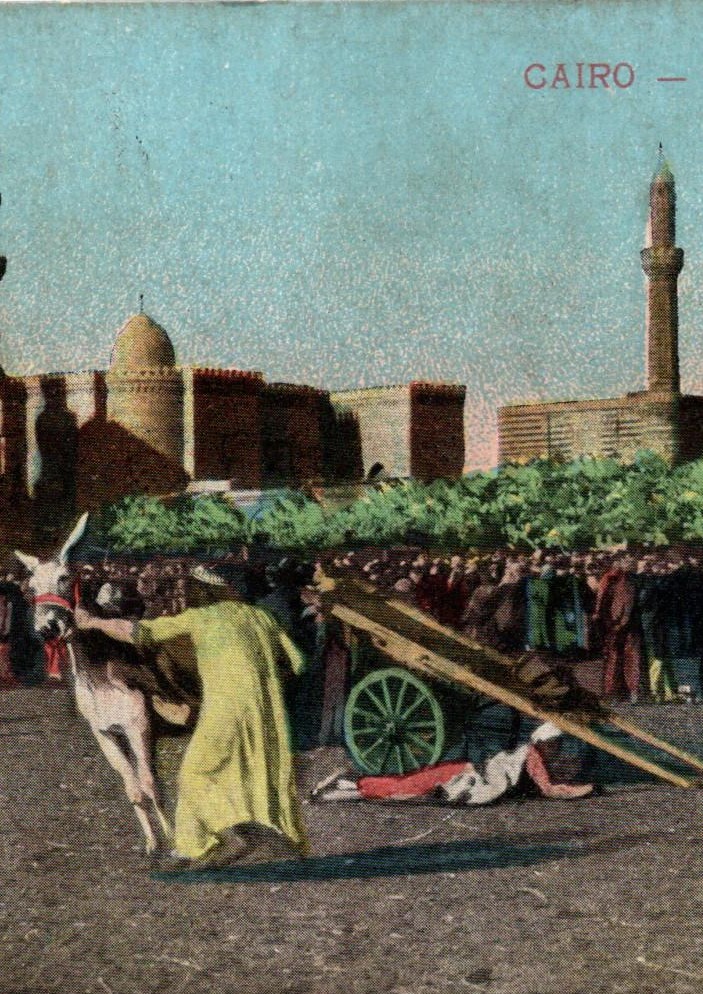
“In the enfolding rage some were pointing toward a solitary waggon under which terrified youngsters were hiding. Laurie recognised them instantly.” Ch 2, The Poet Laurie Ate
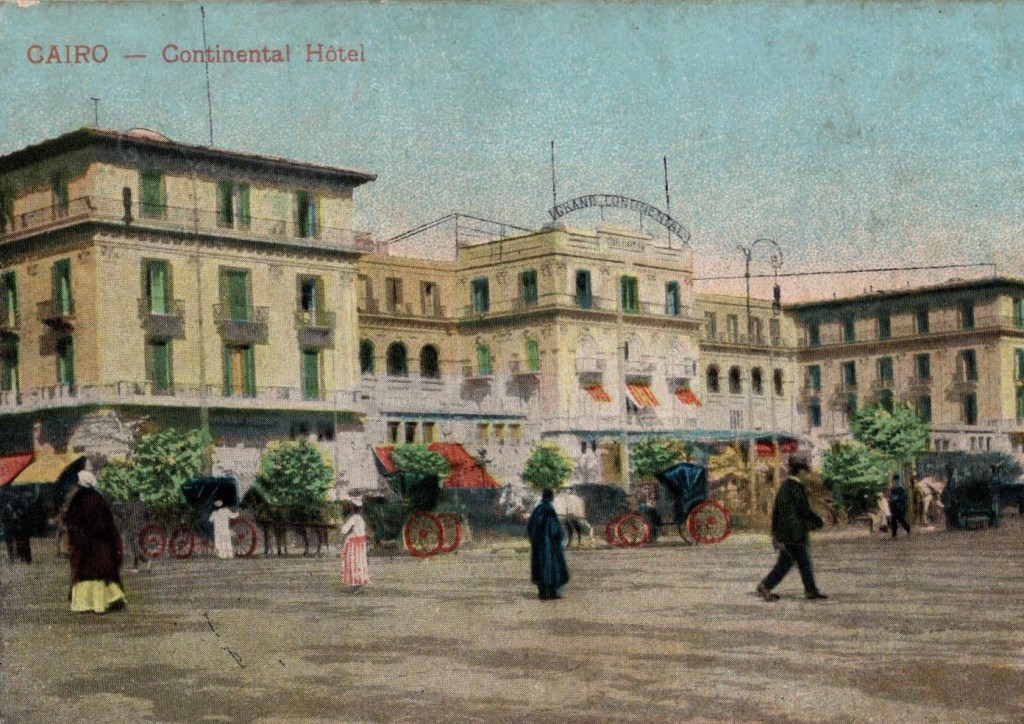
The Continental Hotel which housed British Officers, and where in the story Laurie was allocated a tiny basement room once his undercover work had begun.
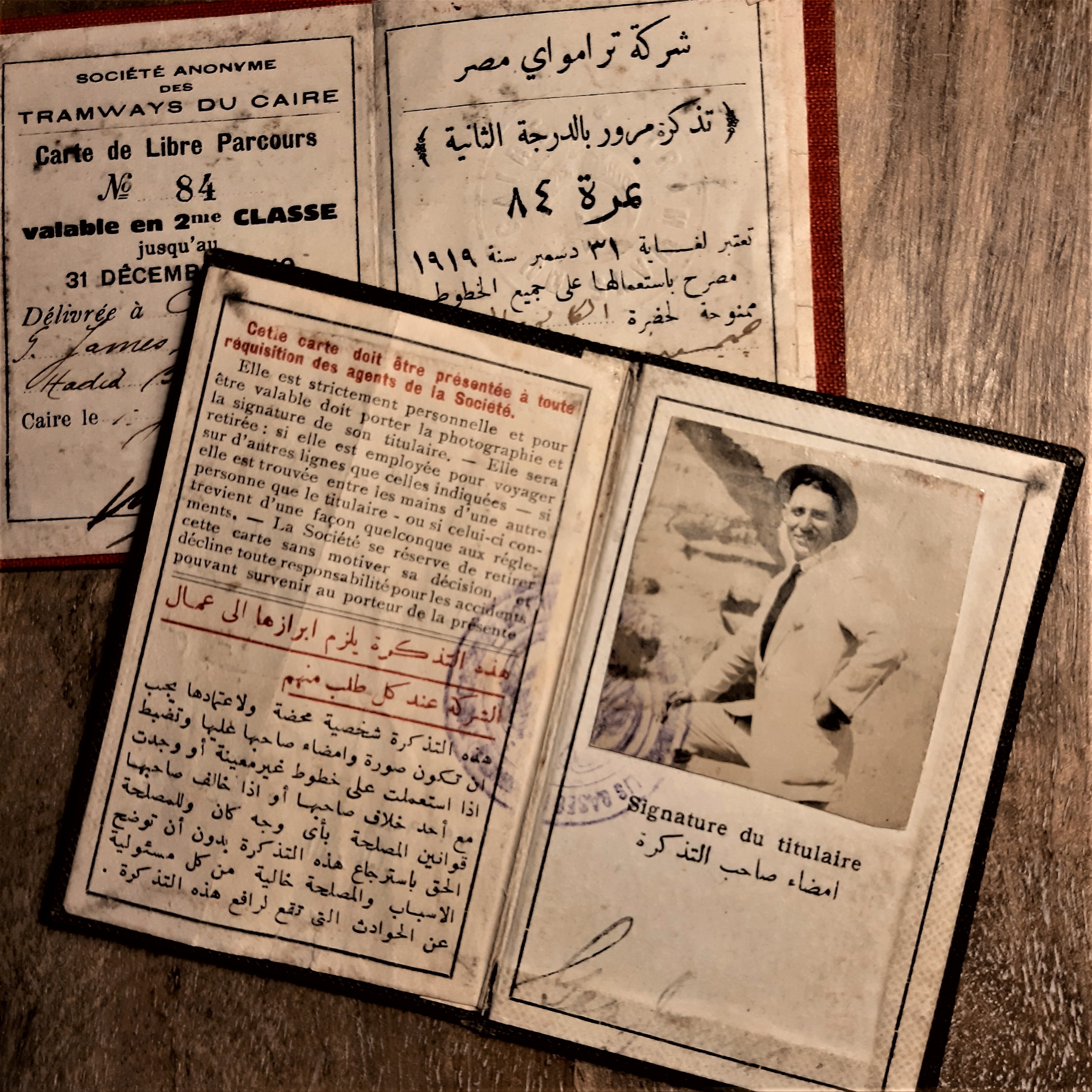
The Cairo Tram Passes of the “real Laurie”.
“It`s an important man that has two passes.”
Ch 12, The Poet Laurie Ate.
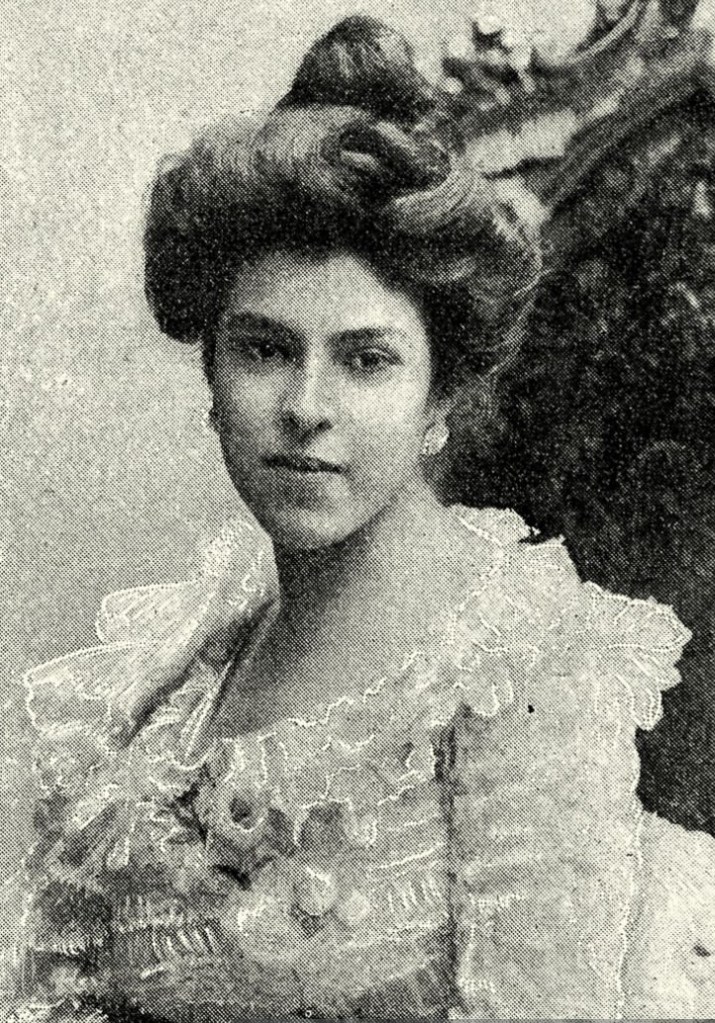
Llucia Quintana, the fictitious matriarch of the story.
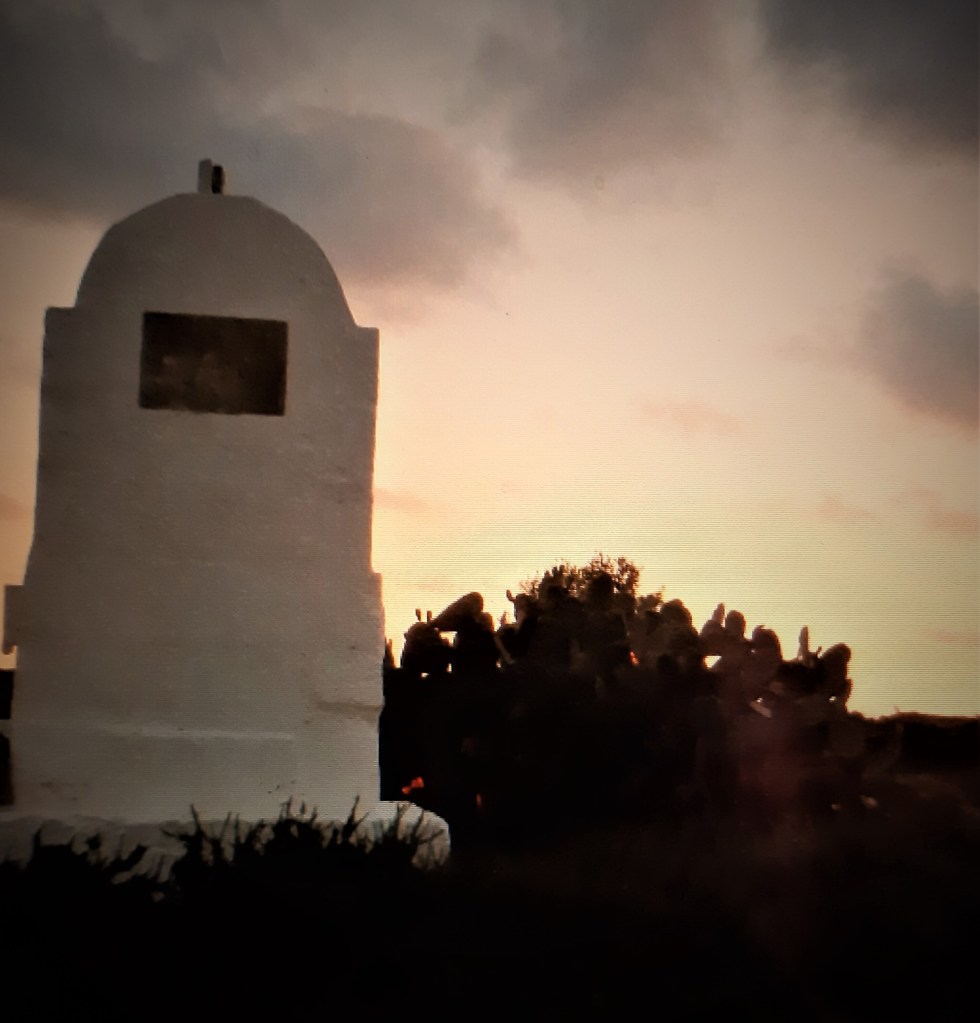
The Cisterna De Padrino, used fictitiously within the novel as the place where Llucia and Oriol Quintana meet to discuss his final trading trip across the Mediterranean to Cairo, Ch 3. In the novel it`s placed within the Quintana Farm at Turo Vell.
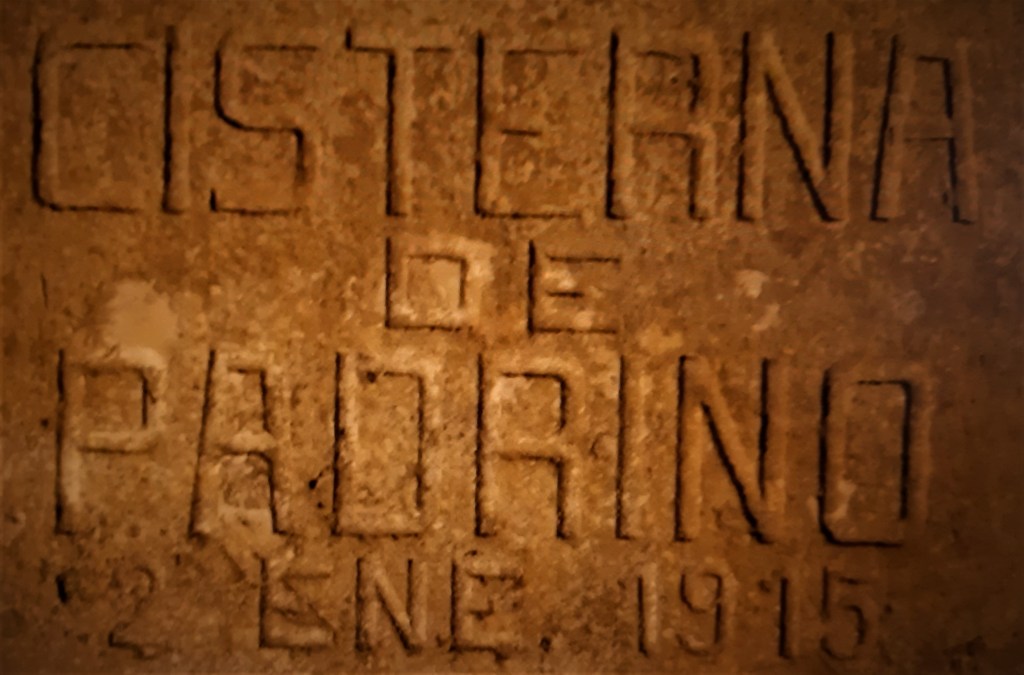
The inscription-Cisterna De Padrino (Water Tank or Water System of the Godfather or Patron) that adorns the well.
This well can still be found- in the grounds of The Hotel Rural Binigaus Vell in Es Migjorn Gran, Menorca. The well/cistern is used fictitiously as an elaboration to the plot, and was part of the initial inspiration for the novel.
Why did you write the book? What was your inspiration?
Matador Publishers-Ash JAMES
The story has been a long time in the making since a visit to the Spanish island of Menorca. Just beyond the village we stayed in was a former farmhouse with a large and recently renovated well. I imagined this well must have had something of a history; a meeting point perhaps, or a place of concealment? A mile away down a roughened drover track toward the sea was a huge cave, where Iron Age burials had been recorded; large enough I imagined as a refuge or store place for local communities in times of need. Such a possibility was more than likely; Menorca had a history of suppression, with the most recent colonisers being the Spanish mainlanders themselves. All I needed was a connection, a spark, to light up a story.
Years later during the winter of 2019/20 as the first Covid lockdown approached, I began to check old documents, post cards and medals passed down from my Grandad, safely stored for a time I could do them justice. To my amazement I began to find evidence of his exploits in Cairo in World War 1 (WW1), information about which I was barely aware. The more I dug, the more apparent it became that Grandad, a village policeman, had played something of a civilian plain-clothes military police role in this huge Arabic city, reporting to the British Army`s Provost Marshall. Not only that, even though technically just a corporal he, together with his fellow plain clothed colleague was commended by his superiors for his role in the ` Sugar Case` , eventually receiving the Meritorious Service Medal. As children it was whispered he`d captured a spy though we were too afraid to ask, and he never discussed such things.
This was the link I needed for the story, especially as further research confirmed sugar, a major resource for the Egyptian economy and greatly demanded by the locals, was disappearing at a rate of knots. Even though there was a war trading had continued across the increasingly dangerous Mediterranean to many different places, including the island of Menorca. It seemed reasonable to conclude that some of the sugar so conveyed wasn`t formally sanctioned. Furthermore, that even plundered historic artefacts and works found their way under such cover to Blighty, assisted by British hands. When I then unearthed a letter to Grandad from a Cairo banker who seemed to have been acting as his local agent, and then his two Cairo Tramway passes, one of which had the words `Secret Agent` written somewhat incongruously inside, that was it: I was off.

Pictorial of some key themes from The Poet Laurie Ate
©2026 Ash James Arts. All Rights Reserved. Web Site by Ash James Design.
 Words Songs Arty